About Oh My Health
Devices change.
Your history stays.
A personal reason to build a more lasting home for health data.
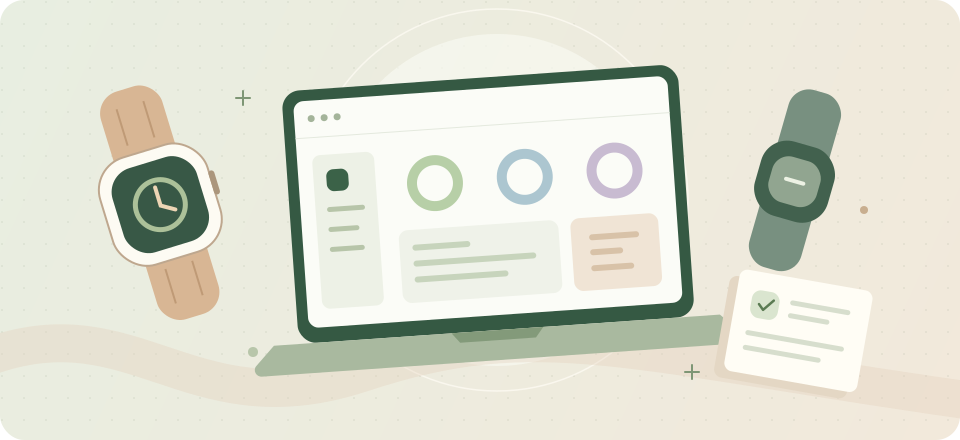
From early fitness bands to Apple Watch, Garmin, and WHOOP, wearables have been a long-running interest of mine. Each device offers a different way to understand sleep, training, and changes in my health over time.
Changing devices, though, often means starting a new history. The old records remain in another app, while the new one begins learning from scratch. Hardware breaks. A different product catches my attention. Neither should make years of health records harder to use.
System health apps bring some of that information together, and manufacturers offer ways to export it. Keeping a useful, continuous record across devices still takes work. That was the frustration that started Oh My Health.

A history worth keeping.
These records describe my sleep, my workouts, and changes in my body. I believe I should be able to keep a copy on a computer I trust, and decide how to use it.
Years from now, better tools may help us understand things we cannot see today. Having the history available gives those tools more to work with than the few months since the last device purchase.
The device shouldn’t choose the AI.

Some of the AI features I’ve tried in wearable apps have been disappointing. A slow response that mostly repeats the numbers on screen is hard to justify another subscription for.
When there’s already an AI you know and trust, using it with your health data should be an option. An existing subscription may support that connection; for other tasks, paying for API usage as needed may make more sense. The choice should be yours.
That choice includes where the analysis happens. For sensitive tasks, I sometimes use local models on my Mac. Health records deserve the same consideration. A promise not to train on data matters, but so does where it is stored and who holds it.
Cloud AI can be useful. Local AI offers another path. Looking ahead, a computer at home might help a family understand their health records, with each person deciding what to share. That is a future worth building toward.
Room to make it your own.
Oh My Health grew out of those needs. Keep a useful history across devices, then choose how to explore it. The interface should be part of that choice, too.
The project has two parts. Core handles syncing and querying data from supported sources through a CLI. If you’re comfortable with technical tools, your preferred agent can use it to build a workflow around your questions.
The client brings that foundation into an app for everyday use. It is built on DeepSeek DSH, so the experience can go beyond the dashboard we provide. You can build a dashboard around the things you care about, create your own theme, and share your work with the community.

My preferred way of looking at health won’t suit everyone. There should be room for yours.
A commitment you can inspect.
Putting users in control takes more than a story. Our commitment is to release both Core and the client as open source, so people can inspect how they work, modify them under their licenses, and build their own versions.
Supporting more devices will take help. There are too many for one person to buy and test well. If a source you need is missing, you can vote for it in the app. Contributions can be code, documentation, or testing with a device you know well.
This began with something I wanted for myself. If you’ve wanted your health history to stay useful after changing devices, or to explore it with an AI of your own choosing, I hope you’ll find something here for you.